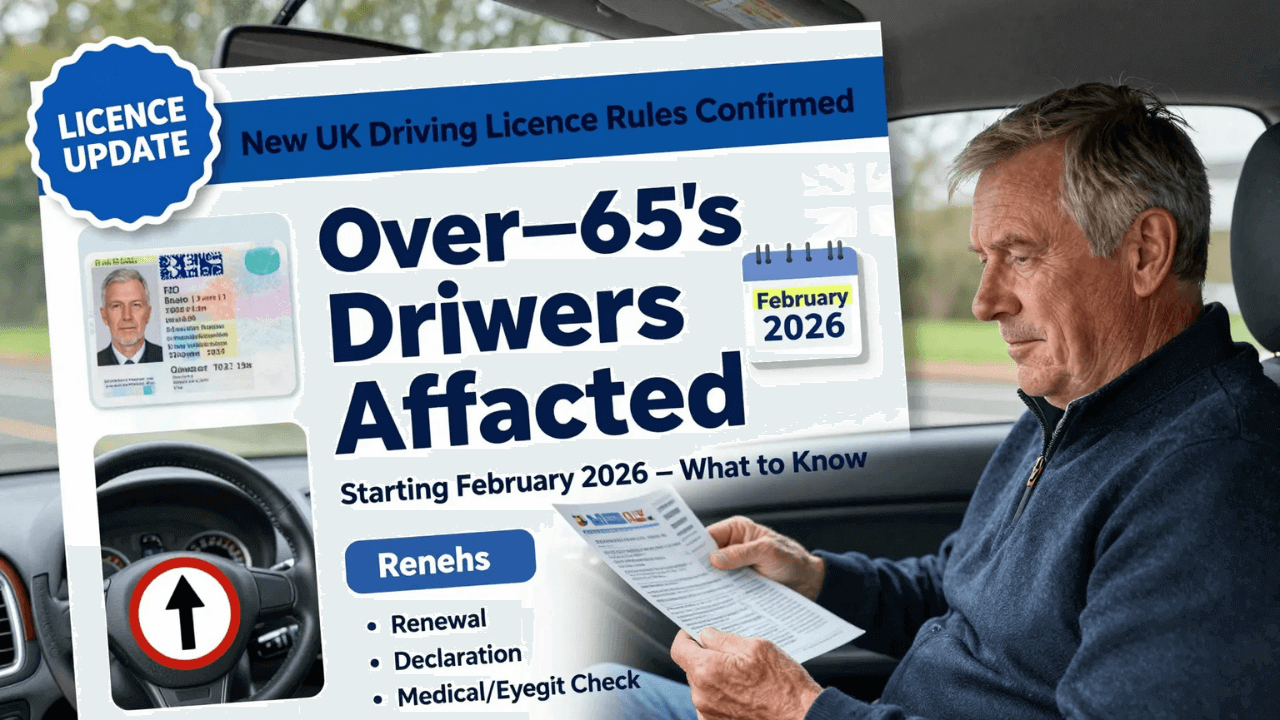
For millions of older drivers across the UK, driving is about far more than convenience. It represents independence, freedom, and the ability to stay connected with family, friends, and everyday life. That is why headlines suggesting new UK driving licence rules for over‑65s starting February 2026 have quickly attracted attention and, in some cases, concern.
Many older motorists are asking the same questions:
- Are new rules really starting in February 2026?
- Will drivers over 65 have to retake a test?
- Is there a medical check now?
- Could licences be taken away automatically?
- What actually changes, if anything?
The reality is more practical and less alarming than some headlines make it sound. There is no sudden blanket ban or mass licence cancellation for over‑65s, but there are important responsibilities, renewal rules, and safety expectations that older drivers should understand clearly.
This article explains what the rules really are, what February 2026 actually means, what has not changed, and what older drivers should do to stay legal and confident on the road.
Why “new rules for over‑65s” are being talked about
Whenever driving and age appear in the same headline, it creates anxiety. Many older drivers worry that age alone could be used to limit their right to drive.
In reality, UK driving law has never worked on age alone. The focus has always been on fitness to drive, not the number on your birthday card.
Talk of “new rules” often appears because of:
- increased focus on road safety
- growing numbers of older drivers
- reminders about medical responsibilities
- upcoming administrative changes or guidance updates
February 2026 is often mentioned because it aligns with updates to guidance, awareness campaigns, and clearer enforcement of existing rules — not because of a brand‑new law targeting over‑65s.
The key fact: there is no automatic driving ban at 65 or 70
One of the biggest myths is that drivers lose their licence automatically once they pass a certain age.
That is not true.
In the UK:
- You do not lose your driving licence at 65
- You do not automatically lose it at 70
- You are not forced to retake a driving test just because of age
Instead, the system is based on regular renewal and self‑declaration.
What actually happens when you reach 70
The most important age milestone for UK drivers is 70, not 65.
When you turn 70, your driving licence expires, and you must renew it. This renewal is free and usually straightforward.
The process involves:
- confirming your personal details
- declaring whether you have any medical conditions that affect driving
- confirming you still meet the eyesight standards
There is no automatic test, and no doctor’s exam is required unless there is a specific medical reason.
Once renewed, the licence is usually valid for three years.
What about drivers aged 65 to 69
For drivers aged 65 to 69:
- your licence remains valid until its normal expiry date
- no special renewal is triggered just because you turned 65
- the same legal responsibilities apply as for all drivers
So there is no new requirement that suddenly applies at 65 in February 2026.
What February 2026 actually refers to
When headlines mention February 2026, they are usually referring to clearer enforcement and awareness of rules that already exist, rather than the creation of a brand‑new system.
These include:
- reminding drivers of their duty to report medical conditions
- encouraging regular eyesight checks
- ensuring renewals are completed on time
- improving guidance for older drivers
In other words, the law itself is not changing dramatically — but expectations around compliance and safety are being emphasised.
Medical conditions and the duty to report
One area that is increasingly highlighted is medical fitness to drive.
UK law requires drivers of all ages to inform the licensing authority if they develop a medical condition that could affect their ability to drive safely.
These can include:
- vision problems
- certain heart conditions
- neurological conditions
- episodes of fainting or loss of consciousness
- conditions affecting reaction time or concentration
This duty applies whether you are 25 or 85. However, older drivers are statistically more likely to develop such conditions, which is why the issue is often discussed in relation to over‑65s.
Failing to report a relevant condition can result in:
- fines
- invalid insurance
- legal consequences after an accident
This is not new, but enforcement and awareness are becoming stronger.
Eyesight rules older drivers should know
Eyesight is one of the most important factors in driving safety.
The basic legal requirement is that you must be able to:
- read a number plate from the required distance
- have adequate vision, with glasses or contact lenses if needed
There is no mandatory eye test at 65 or 70, but drivers are expected to self‑monitor their eyesight.
Many safety groups now strongly recommend that older drivers:
- have regular eye tests
- update glasses or prescriptions promptly
- avoid driving in poor visibility if eyesight is declining
This guidance is becoming more visible, which can make it seem like a “new rule” even though the law itself has not changed.
Are over‑65s required to take a driving test again
No.
There is no automatic retest for older drivers in the UK.
A driving assessment may only be required if:
- a serious medical condition is reported
- concerns are raised by medical professionals
- specific safety issues are identified
Even then, assessments are individual, not age‑based.
Why older drivers are still allowed to drive
UK policy recognises that many older drivers are:
- experienced
- cautious
- familiar with road rules
- less likely to take risky driving decisions
Age alone is not a reliable indicator of unsafe driving. That is why the UK uses medical fitness and competence, not birthdays, as the deciding factors.
Insurance and older drivers
Another area often confused with licence rules is insurance.
While insurance premiums can rise with age, this is:
- an insurance decision, not a legal driving rule
- based on risk models, not licence validity
Your driving licence remains valid as long as you meet the legal requirements, regardless of insurance cost.
What older drivers should do now
Even though there is no dramatic new rule starting in February 2026, there are sensible steps older drivers can take to stay confident and compliant.
Check your licence expiry date
Know when your current licence expires, especially if you are approaching 70.
Keep medical information up to date
If your health changes, check whether it needs to be reported.
Have regular eyesight checks
Good vision is essential, and small changes can make a big difference.
Read official reminders carefully
Letters or messages about renewal should never be ignored.
Avoid relying on social media headlines
They often exaggerate or oversimplify the situation.
Be aware of scams using driving licence fears
Whenever talk of “new rules” circulates, scammers take advantage.
Be cautious of messages that say:
- “Your licence will be cancelled unless you act now”
- “Pay a fee to keep your driving licence”
- “Click here to confirm your licence before February 2026”
Legitimate licence renewals are handled through official channels such as DVLA, and you are never asked for sensitive details through random links.
What has NOT changed
To be very clear, as February 2026 approaches:
- there is no automatic ban for over‑65s
- there is no new driving test based on age
- there is no sudden medical exam requirement
- licences are not being taken away just for being older
The focus remains on safe, responsible driving, not age discrimination.
Why these stories keep appearing
The UK has an ageing population, and road safety is always under review. As a result, guidance updates, reminders, and consultations are often reported as “new rules”.
In reality, they are usually about:
- reinforcing existing responsibilities
- encouraging safer driving habits
- ensuring licences remain up to date
Understanding that difference helps reduce unnecessary worry.
Key points to remember
- UK driving licences are not cancelled at 65 or 70
- Renewal at 70 is normal and free
- Medical conditions must be reported at any age
- Eyesight and fitness to drive are the real focus
- February 2026 does not introduce a mass change
- Headlines often exaggerate what is actually guidance
Final thoughts
The headline “New UK driving licence rules for over‑65s start February 2026” sounds dramatic, but for most older drivers, nothing sudden or alarming is happening.
What is changing is awareness, guidance, and enforcement of rules that already exist — all aimed at keeping roads safe while allowing older people to continue driving for as long as they are fit to do so.
For responsible older drivers who renew on time, monitor their health, and stay informed, driving in 2026 will look much the same as it does today.